


Burgos and University of Burgos
Burgos
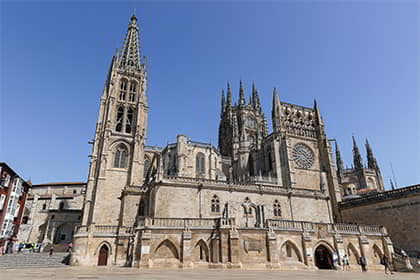
Founded in the 9th century, this Castilian city has witnessed centuries of history and splendor. Its monumental Gothic cathedral, a UNESCO World Heritage Site—together with the historic city center—stands as the emblem of a place that preserves a rich artistic and cultural legacy. Burgos is also a key stop along the Camino de Santiago, which crosses the city from east to west, making it an essential point on one of Europe’s most important pilgrimage routes.
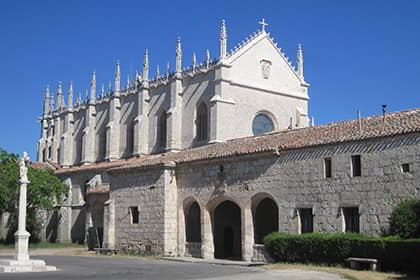
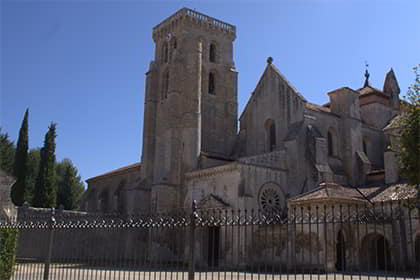
Beyond the cathedral, the city offers a wealth of remarkable landmarks. The Cartuja de Miraflores, a serene Carthusian monastery on the outskirts, stands out for its exquisite late Gothic art. The Monasterio de las Huelgas, founded in the 12th century, reflects the historical power and influence of the Castilian monarchy. Traces of the medieval past are still visible in the remains of the city walls and its historic gates, which once protected Burgos.
Burgos is also a gateway to our most distant past. The Museum of Human Evolution presents the extraordinary discoveries from the Atapuerca archaeological sites—also a UNESCO World Heritage Site—which have profoundly transformed our understanding of human origins.
The Paseo del Espolón, lined with trees and elegant buildings, offers one of the city’s most iconic promenades, running alongside the Arlanzón River, whose waters gently flow through Burgos and contribute to its distinctive character.
The city’s appeal is further enriched by its gastronomy, deeply rooted in Castilian tradition. Local specialties such as roast lamb, morcilla de Burgos, and fresh regional produce reflect a cuisine that is both simple and full of character, offering visitors an authentic taste of the region.
Together, these elements make Burgos a city where history, culture, landscape, and culinary heritage are closely intertwined.
University of Burgos
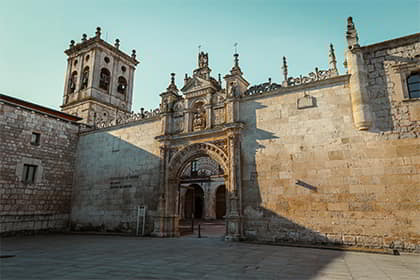
The University of Burgos (UBU), created in 1994 from former faculties of the University of Valladolid, is a modern institution with a strong connection to the city’s heritage. Its main campus is located at the Hospital del Rey, a remarkable 13th-century complex originally founded to care for pilgrims on the Camino de Santiago, now carefully restored for academic use.
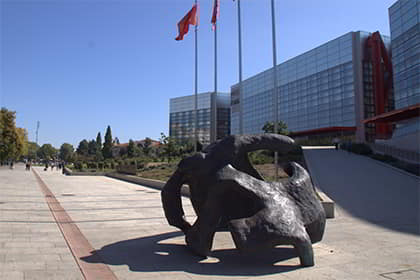
Alongside this historic setting, the university offers contemporary facilities and a growing research profile, maintaining close links with its cultural and scientific environment.